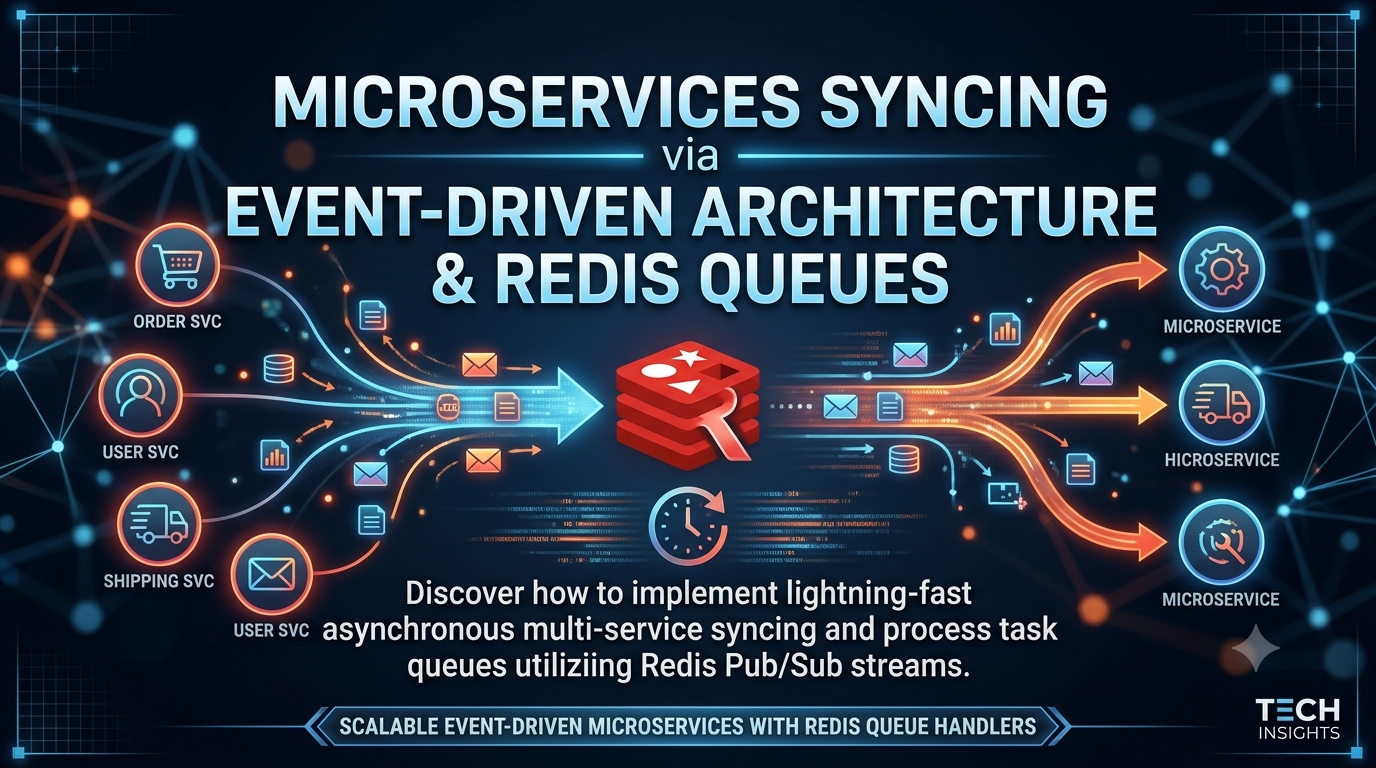
Microservices Syncing via Event-Driven Architecture & Redis Queues
Discover how to implement lightning-fast asynchronous multi-service syncing and process task queues utilizing Redis Pub/Sub streams.
Distributed Systems
Asynchronous Microservices Syncing via Distributed Redis Event Pipelines
Systems Engineering • 12 Min Read
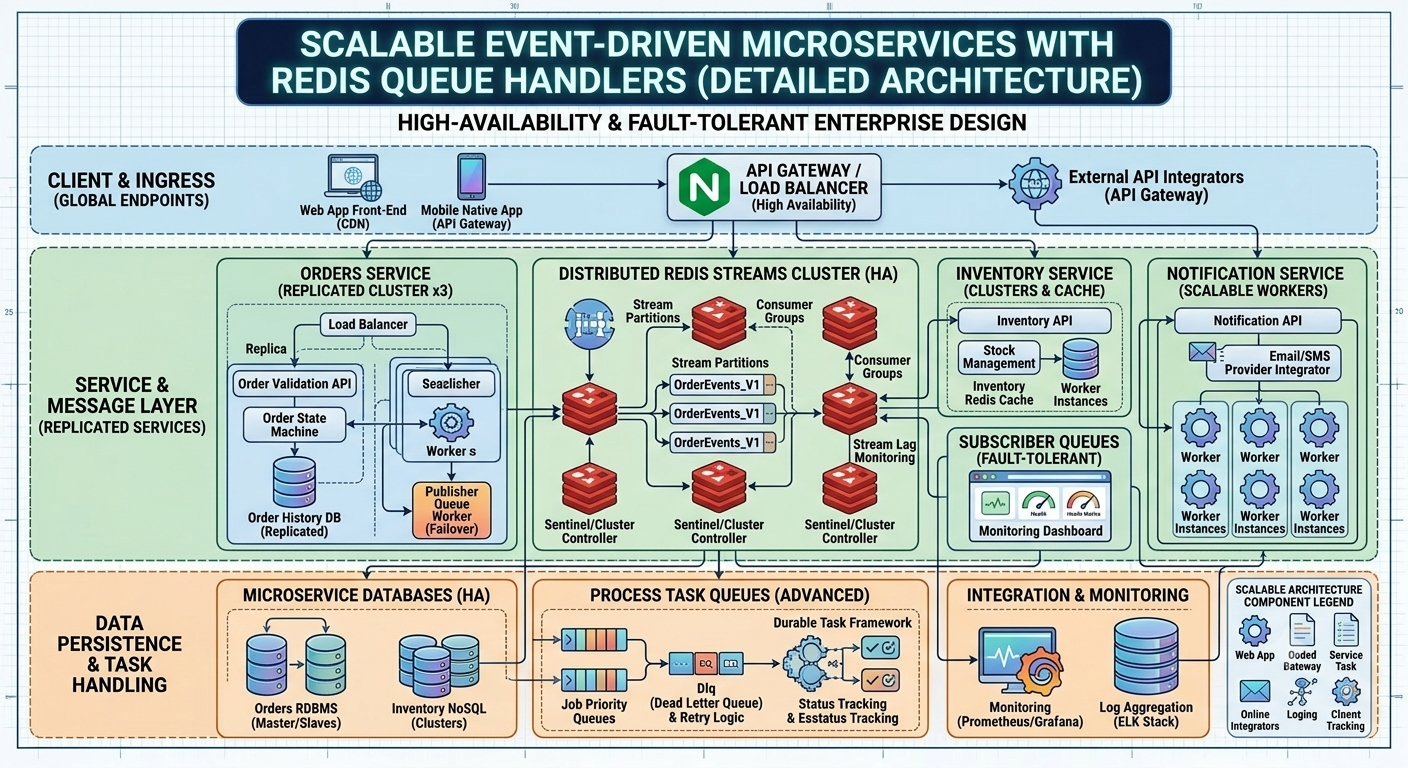
The Power of Asynchronous Microservice Syncing
Synchronous HTTP calls between microservices create tightly coupled architectures. If Service B lags or drops offline, Service A's incoming client threads block and time out. Transitioning to an **event-driven architecture using Redis queues** isolates your processes. High-overhead tasks (like generation, indexing, or billing transactions) are offloaded to memory queues instantly, ensuring user journeys stay smooth and uninterrupted.
Implementing a Reliable Redis Worker Queue
Use atomic list commands (RPOPLPUSH or Redis Streams) to build task queues. This prevents messages from being lost if a worker instance crashes mid-execution.
Laravel Task Queue Broker Configuration Example
// Config structure establishing high-performance memory queue drivers
return [
    'default' => env('QUEUE_CONNECTION', 'redis'),
    'connections' => [
        'redis' => [
            'driver' => 'redis',
            'connection' => 'queue_cluster',
            'queue' => env('REDIS_QUEUE', 'hosting_panel_jobs'),
            'retry_after' => 90,
            'block_for' => null,
        ],
    ],
];
Performance Recommendation
When using Redis for long-lived task queues, monitor your memory eviction policies. Set maxmemory-policy noeviction to prevent Redis from deleting unhandled queue messages when it reaches memory capacity.
Leave a comment
Your email address will not be published. Required fields are marked *