Advanced API Integration Middleware & Security Audits
Learn architectural rules to safe-guard third-party integrations, write robust middleware, and protect backends from injection exploits.

API Security
Advanced API Integration: Writing Resilient and Auditable Middleware
Security Audit • 11 Min Read
Why Security-First Middleware is Mandatory
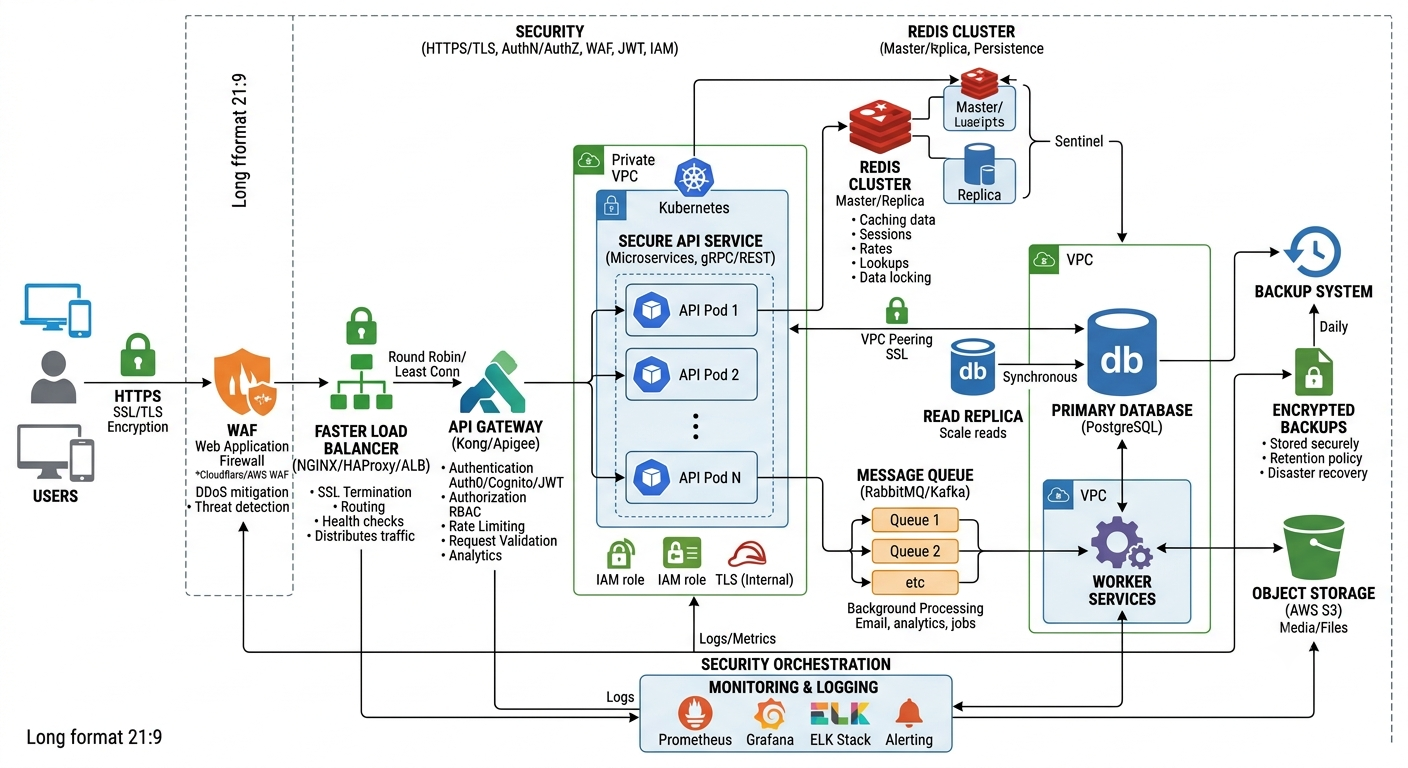
Every external endpoint your platform consumes or exposes introduces security risks. Malicious clients can attempt payload injections, token reuse, or rapid brute-force attacks. Building a **hardened middleware pipeline** protects your internal microservices by ensuring every incoming payload is validated, decrypted, and inspected before reaching your system core.
Validating Payload Signatures Programmatically
Never trust raw header claims. When building webhook endpoints for third-party platforms, verify the payload using a cryptographically generated HMAC hash to ensure the data hasn't been modified in transit.
ExpressJS Cryptographic Verification Middleware
const crypto = require('crypto');

function verifyWebhookSignature(req, res, next) {
    const signature = req.headers['x-platform-signature'];
    const secret = process.env.WEBHOOK_SECRET_TOKEN;

    if (!signature) {
        return res.status(401).json({ error: 'Missing security validation metadata block.' });
    }

    const computedHash = crypto
        .createHmac('sha256', secret)
        .update(JSON.stringify(req.body))
        .digest('hex');

    // Mitigate timing attack exploits using timingSafeEqual
    if (!crypto.timingSafeEqual(Buffer.from(signature), Buffer.from(computedHash))) {
        return res.status(403).json({ error: 'Cryptographic identity verification signature match mismatch.' });
    }

    next();
}
Security Audit Checklist
Always enforce global maximum body size limits inside your API parsers (e.g., limit JSON payloads to 1mb) to easily prevent malicious clients from overwhelming your memory allocations with massive payloads.
Leave a comment
Your email address will not be published. Required fields are marked *