High-Scale Database Optimization Methodologies
Master advanced database optimization techniques, compound indexing, and query profiling to eliminate performance bottlenecks in high-traffic MySQL and PostgreSQL systems.

Database Engineering
High-Scale Database Optimization: Master Compound Indexing and Query Profiling
Technical Deep Dive • 14 Min Read
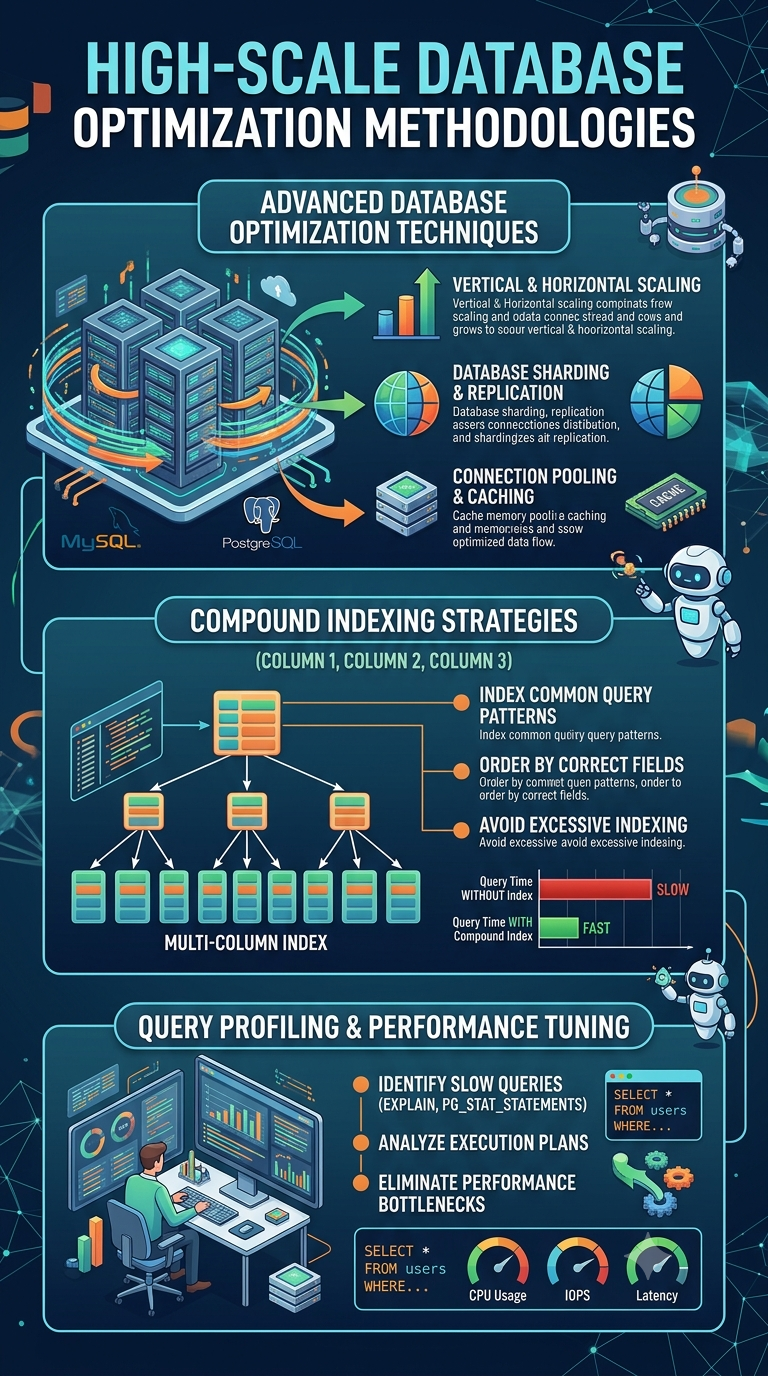
Why Database Tuning is Critical for Scale
As data grows into millions of rows, generic queries without proper optimization transition from sub-millisecond responses to system-crashing table scans. Slow databases lock CPU threads, spike memory usage, and cascade failures into your application layer. Optimizing queries through calculated index management ensures your infrastructure remains performant without expensive hardware upgrades.
Implementing Compound Indexes and Analyzing Execution Plans
Always analyze queries using the EXPLAIN keyword. When querying multiple columns in a WHERE clause, single column indexes are often ignored. You must create compound (multi-column) indexes following the left-to-right prefix rule.
SQL Optimization Example
-- Unoptimized Query causing full table scan on massive datasets
SELECT id, user_id, status, created_at FROM orders WHERE tenant_id = 5 AND status = 'completed' ORDER BY created_at DESC;

-- Step 1: Analyze the unoptimized bottleneck
EXPLAIN SELECT id, user_id, status, created_at FROM orders WHERE tenant_id = 5 AND status = 'completed' ORDER BY created_at DESC;

-- Step 2: Create a high-performance compound index matching your query layout
CREATE INDEX idx_tenant_status_created ON orders (tenant_id, status, created_at DESC);
DBA Golden Rule
Avoid over-indexing. Every index speeds up reads but slows down write operations (INSERT, UPDATE, DELETE) because the database engine must rebuild the underlying B-Tree index map on every change.
Leave a comment
Your email address will not be published. Required fields are marked *