Distributed Log Streaming Architectures
Learn how to engineer an enterprise-grade distributed logging and system metrics pipeline utilizing Apache Kafka brokers and high-speed memory streaming.
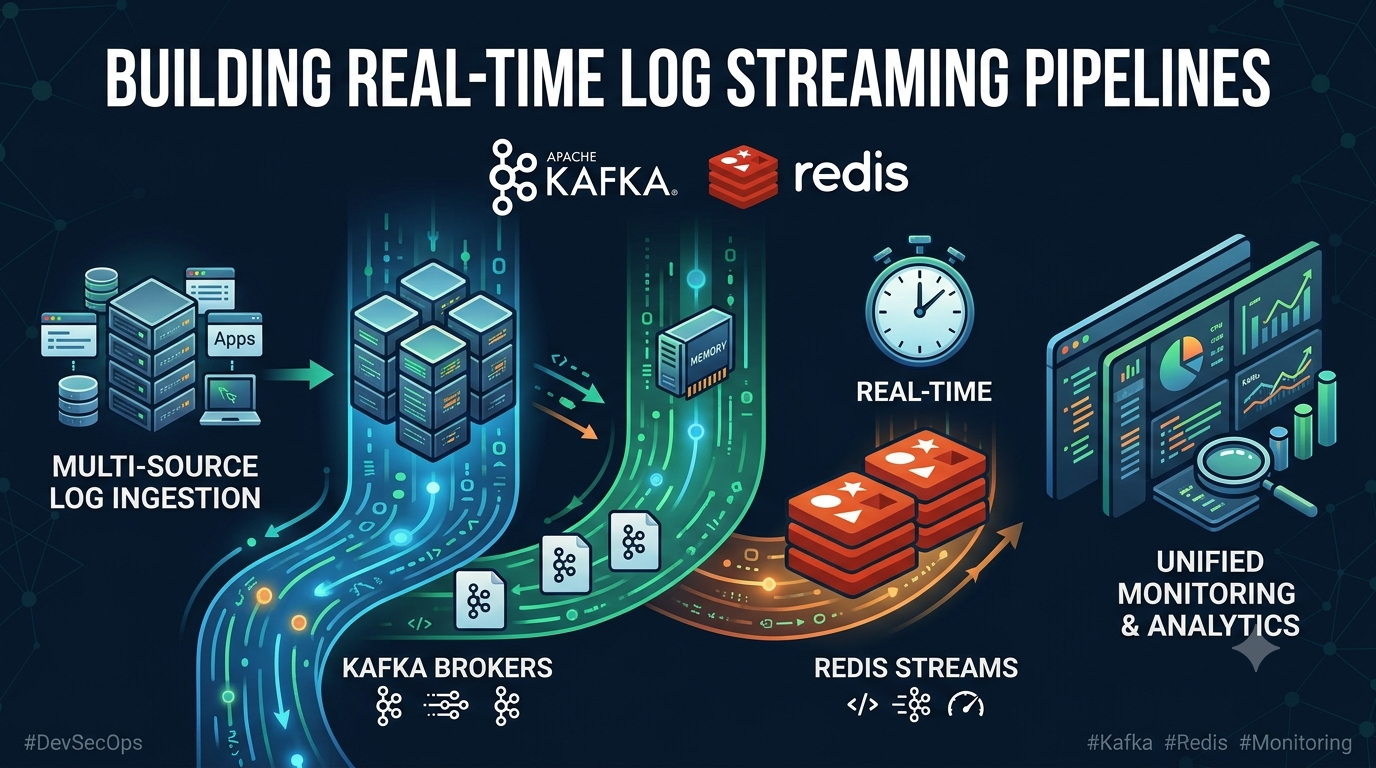
Data Streaming
Architecting High-Throughput Log Streaming via Apache Kafka Brokers
Architecture Guide • 11 Min Read
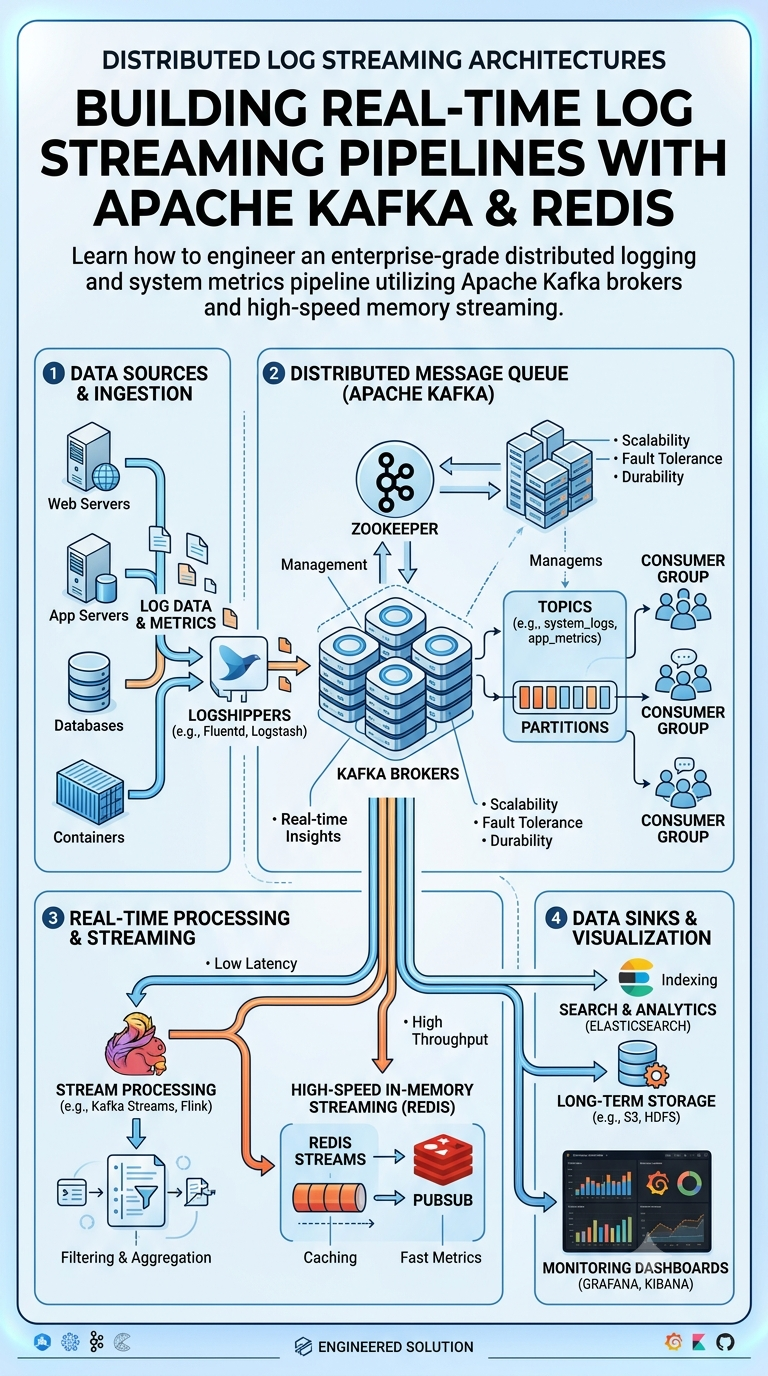
Why Distributed Log Centralization Matters
In a microservices or distributed server environment, writing logs directly to local disk arrays creates major operational friction. If an instance drops or scales down, vital debugging logs are lost forever. Processing millions of infrastructure logs via a centralized broker like Apache Kafka avoids disk I/O bottlenecks and securely captures application events asynchronously without blocking user requests.
Configuring Asynchronous Log Publishers
To prevent logging code from causing latency inside client APIs, your log publishers should write directly to memory stream sockets or queue handlers that push packets to the central pipeline in background threads.
Node.js Asynchronous Kafka Producer Implementation
const { Kafka } = require('kafkajs');

const kafka = new Kafka({
    clientId: 'hosting-panel-logger',
    brokers: ['kafka-node-1:9092', 'kafka-node-2:9092']
});

const producer = kafka.producer();

const streamSystemLog = async (serverName, statusEvent) => {
    await producer.connect();
    await producer.send({
        topic: 'infrastructure-system-logs',
        messages: [
            { key: serverName, value: JSON.stringify({ timestamp: Date.now(), event: statusEvent }) }
        ],
    });
};
Infrastructure Recommendation
Set strict data retention policies on your Kafka log topics (e.g., 7 days maximum) to prevent uncompressed string lines from filling up server storage volumes.
Leave a comment
Your email address will not be published. Required fields are marked *