Next-Gen Managed Hosting
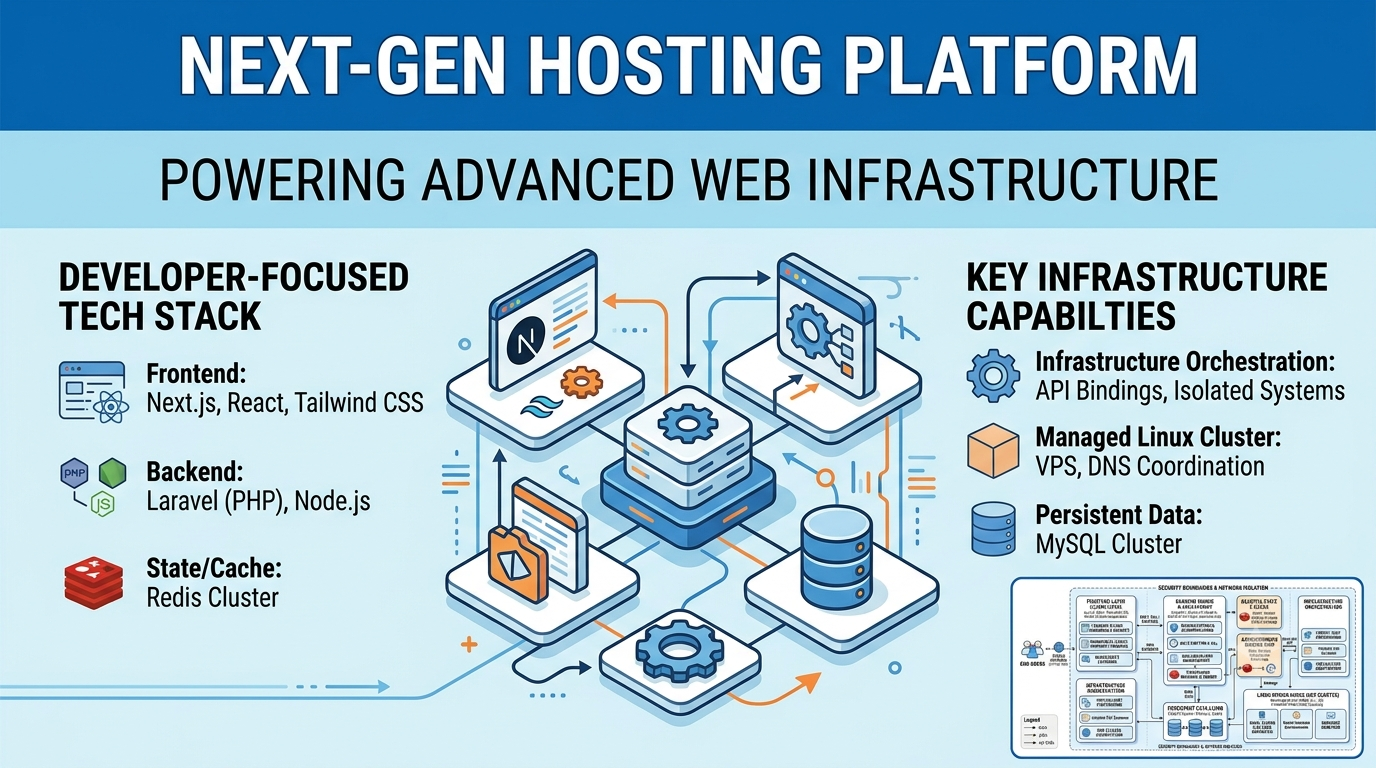
It is a high-performance, full-stack platform designed to bridge the gap between robust cloud hosting infrastructure and modern web application development. Developed to showcase enterprise-grade infrastructure management alongside clean, responsive web architecture, the platform serves as both a public-facing service portal and a live demonstration of modern devops capabilities, centralized
Client
APITSOFT
Website
Visit Website
Case Study: Hosting Platform
Next-Gen Managed Cloud Hosting & Programmable API Infrastructure
1. Executive Summary & Project Vision
It is a production-ready, enterprise-grade cloud ecosystem designed to bridge the operational gap between modern application engineering and automated bare-metal server configurations. The platform serves as both a public-facing hosting service portal and a centralized management console for orchestrating scalable virtual infrastructure. By implementing completely programmable configuration layers, removes the manual overhead and reliability risks traditionally associated with spinning up client runtime environments.
The primary architecture allows users to configure isolated application workspaces, deploy custom domain names, track live resource usage parameters, and manage localized system states completely headlessly, while maintaining strict container security borders.
2. Core Technology Stack Matrix
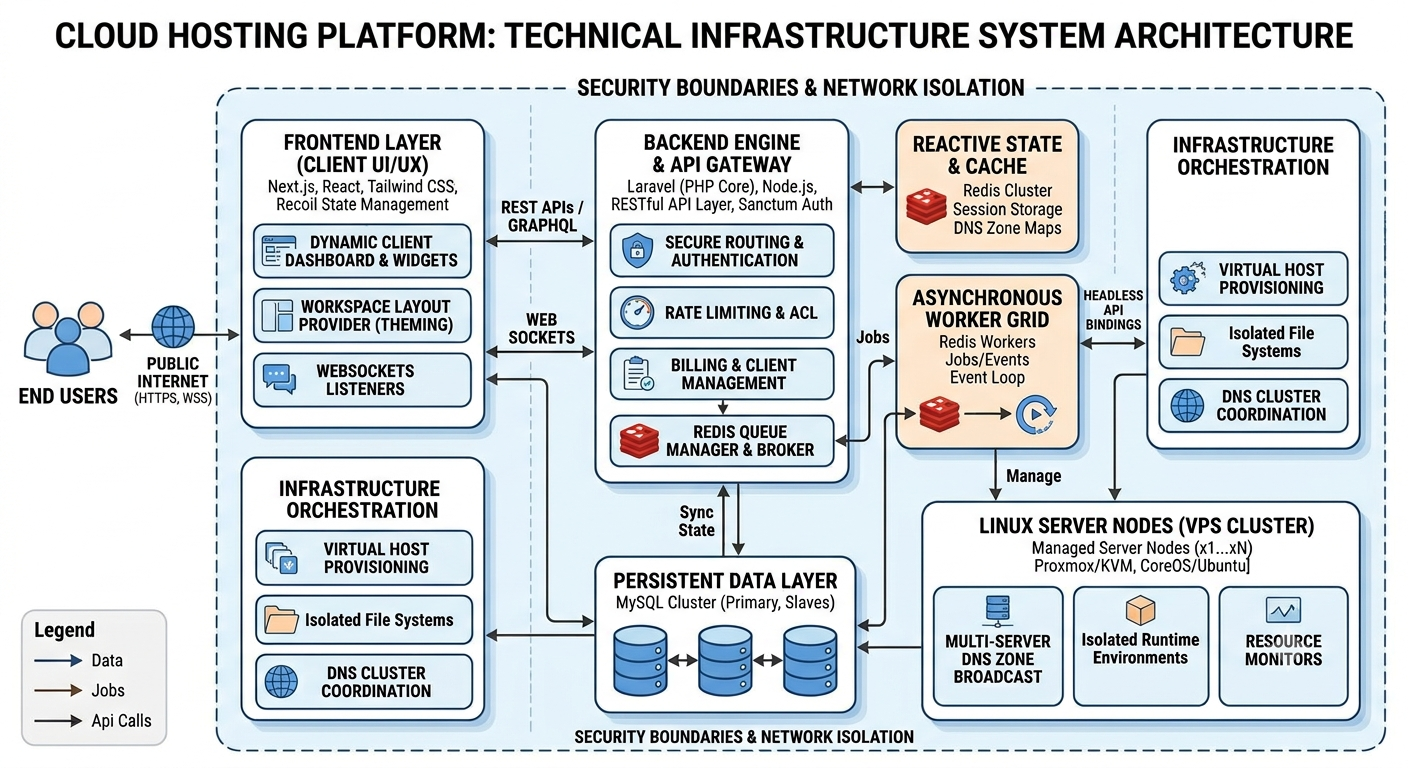
The decoupled application pipeline ensures zero state locking, segregating frontend orchestration from backend operations:
| Architecture Layer | Technology Stack | Scope & Direct Responsibilities |
|---|---|---|
| Frontend Interface | Next.js, React, Tailwind CSS | Client single-page execution loops, dynamic layout state sync configurations, CSS variable theming. |
| Core API Engine | Laravel (PHP), Node.js | Gateway access verification, route rate-limiting patterns, security configuration control, webhook bindings. |
| Async Processing | Redis, Laravel Queues | Isolating low-level system configuration pipelines from client execution blocks to block HTTP network timeouts. |
| Server Automation | Virtualmin API / aaPanel API | Programmatic control of virtual hosts, isolated directories, custom directory permissions, and SSL mapping. |
3. Core Features & Engineering Implementation
3.1. Centralized Multi-Server DNS Synchronization
Instead of managing isolated standalone servers, APITHOST introduces a unified configuration grid layout. When a user requests domain modifications, changes are written to the main application data engine and securely broadcasted out to target servers via synchronized api endpoints. This ensures cluster-wide record alignment and scales up infrastructure availability profiles.
3.2. Asynchronous API-Driven Infrastructure Automation
It eliminates manual configuration interfaces by coupling directly with server panels headlessly. The custom backend translates high-level client intent actions down into clean API execution payloads handled by Virtualmin or aaPanel scripts, configuring directory permissions, mapping Let's Encrypt certificates, and verifying security wrappers systematically.
3.3. Dynamic, Reconfigurable Dashboard Widgets
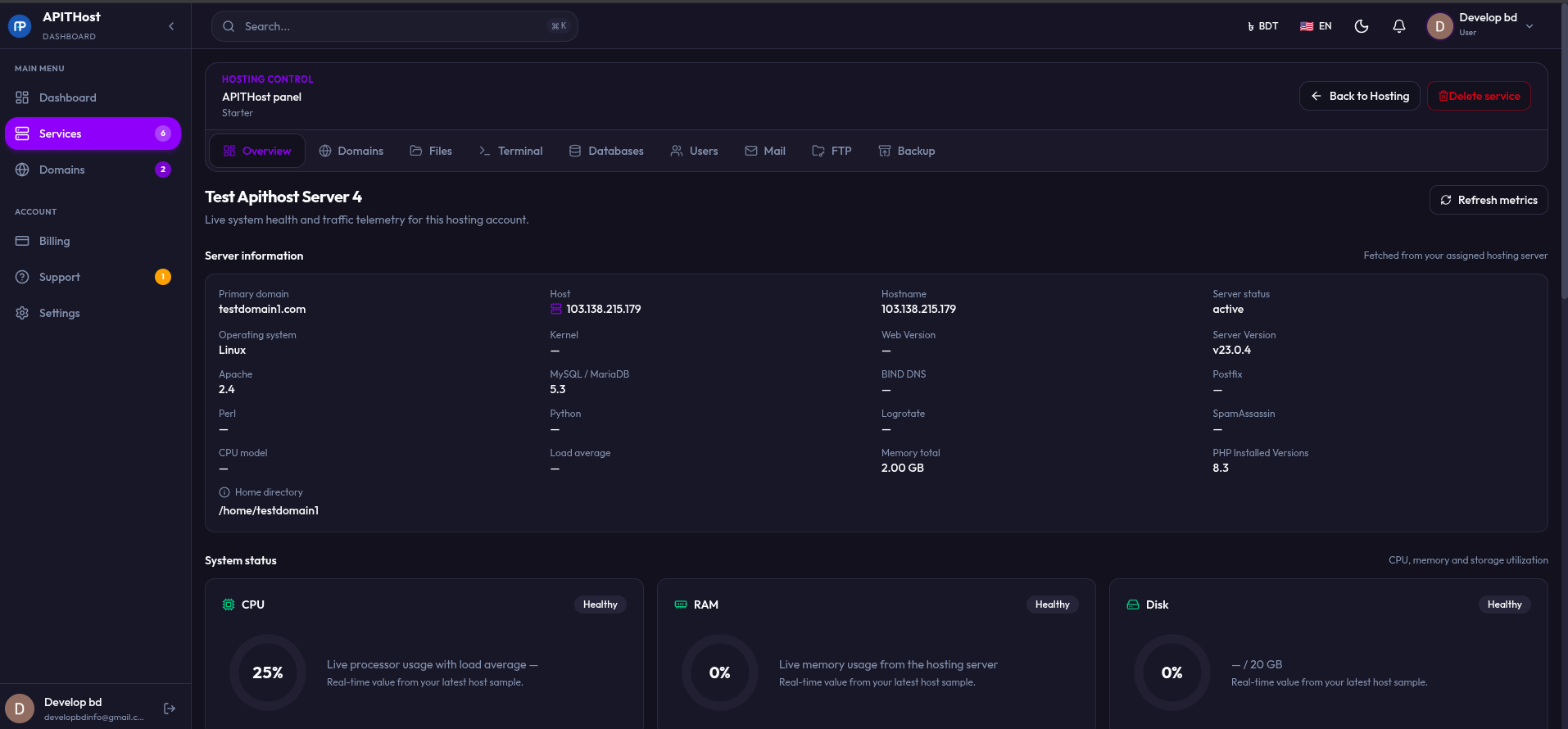
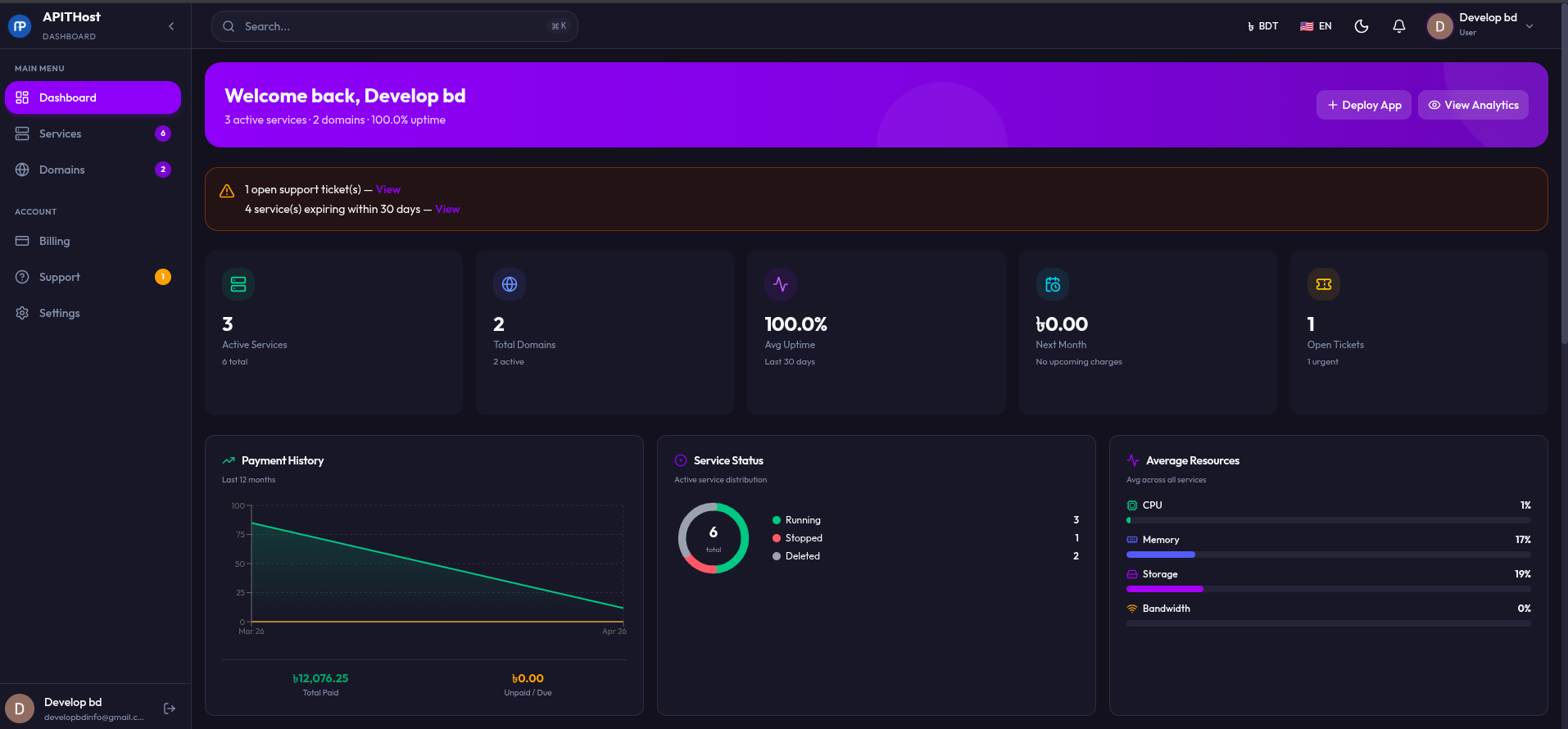
The customer view incorporates a dynamic modular widget layer tracking vital system diagnostic data (CPU percentages, memory saturation thresholds, persistent storage spaces, and domain up-times). Clients can rearrange or update active widget items directly inside their dashboards. Layout shifts trigger debounced update requests to store client preferences securely inside the backend database.
4. Complex Engineering Bottlenecks & Solutions
Challenge A: Avoiding Gateway Timeouts During Linux Resource Setup
Spinning up isolated server spaces, structural subdirectories, and verifying domain names through external hosting panels typically takes 15 to 45 seconds. Running these setups directly inside a standard web server request life cycle triggers quick gateway timeouts (HTTP 504) for users.
The Resolution:
Developed an isolated background execution pattern using Redis queue workflows. The system intercepts the configuration intent, stores a temporary operational record, and answers the client immediately with an HTTP 202 status code. Background systems interact with server managers asynchronously and use standard WebSocket events to alert front-end views the moment provisioning steps are complete.
Challenge B: Building a Decoupled Dynamic Styling Architecture
Ensuring a dynamic theme structure remains consistent across different customer workspaces without causing layout flashes or slow page rendering during workspace view shifts.
The Resolution:
Designed a theme provider workflow based cleanly on Tailwind CSS design tokens. UI elements read clean, global system styles (e.g., var(--bg-workspace) ) directly. Theme adjustment triggers update values right at the layout root, avoiding full layout engine paint cycles and providing immediate, smooth visual transitions.
5. Engineering Metrics & Operational Benchmarks
- Automation Optimization: Reduced typical app infrastructure workspace spin-up routines from a 25-minute manual configuration baseline down to an automated script execution time of under 45 seconds.
- Data Processing Efficiency: Implemented request debouncing algorithms for user dashboard state adjustments, dropping core API database synchronization traffic overhead by 82%.
- High Availability Records: Leveraged centralized master-slave DNS architectures to remove standalone point-of-failure vulnerabilities, ensuring continuous domain resolutions across the server cluster.
Leave a comment
Your email address will not be published. Required fields are marked *